

Originally Posted at “Old Ones Dream” May 23, 2013 and updated here.
After a week at Five Islands and a week at Parker’s Cove we moved over to the Halifax area at the juncture of the South Shore and the Eastern Shore of Nova Scotia. Halifax is a beautiful historic city with much to see and do with a great music scene in the bars down on the docks. An urban soul could find enough to keep them occupied for several days. Our rural souls just hit the high spots, being sure to visit the farmer’s market, and got out of town at the end of the day.
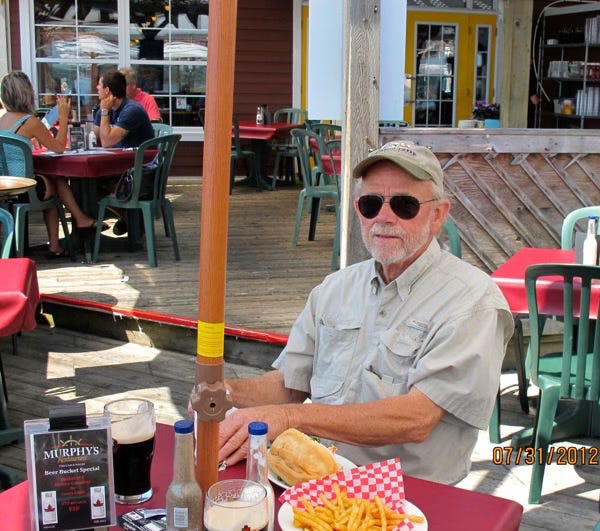
A pint and a lobster roll in my Indian Taco (Spearfish Creek) ball cap.
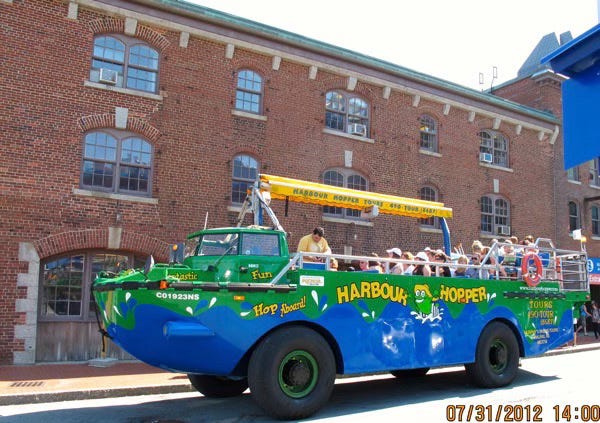
Our Halifax streets and harbor chariot.
While in the Halifax area we visited the harbor town of Lunenburg which was established in 1753 and is a World Heritage Site. It was the weekend of the schooner races and while having lunch we had an up close view of the authentic schooners promenading the harbor in a stiff breeze. We saw the Bluenose II in dry dock. Take a look at these websites if you are nautical.
We drove around the Aspotagan Peninsula and Margarets Bay to Peggys Cove which is one of the most photographed spots in North America. Margaret’s Bay is the site of the crash of Swissair Flight 111 in 1998 and there are memorials both at Peggys Cove and at Baywater on the western shore of the bay opposite Peggys Cove. All of this country is picturesque, but some of our photos look like there are ants crawling over rocks — those are other tourists — a job for Photoshop I suppose.
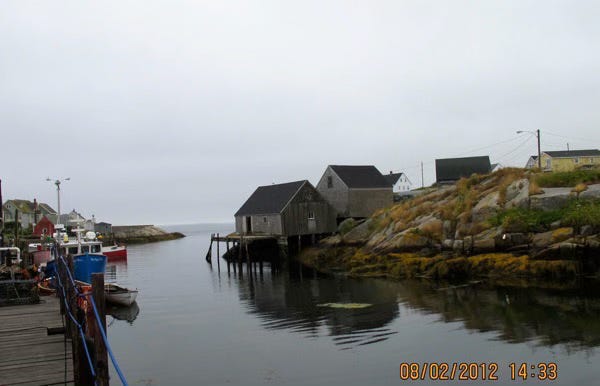
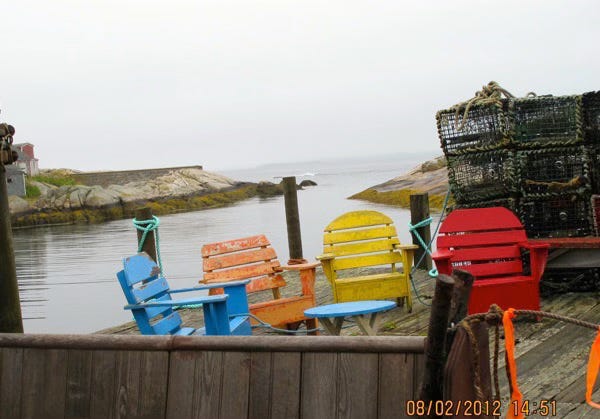
Peggys Cove
Notice that the tide line is “normal” here on the Atlantic compared to the radical tides 50 miles away on the other side of the Island in the Bay of Fundy.
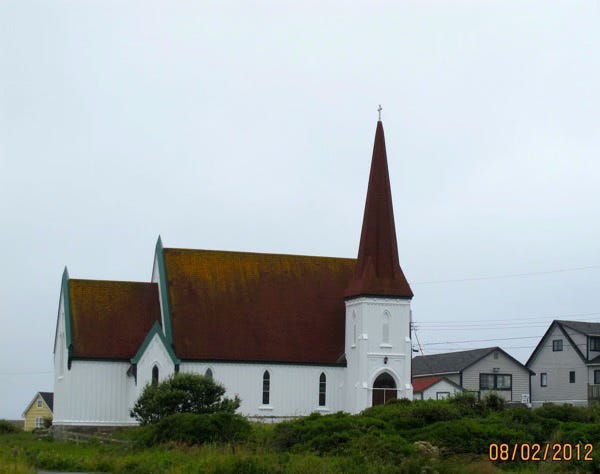
Saint John’s Anglican Church, Peggys Cove
All of our photos of the photogenic Peggys Point light are crawling with people and therefore not appealing. Check out the web site.
This marked the end of our stay on the main island of Nova Scotia.
We departed the next day on the almost 400Km journey to Baddeck, on Cape Breton Island. Baddeck is a thriving tourist village located conveniently in the center of the Island. It is on the North shore of Bras d”Or Lake, an inland sea which cleaves Cape Breton Island from end to end. Baddeck would be our headquarters for most of the rest of our stay in the Maritimes. From there we took week long trips to the Cape Breton Highlands and across Cabot Strait to Newfoundland. The most remarkable points of interest that are readily accessible from Baddeck are:
Highland Village, Iona, Nova Scotia, a living history museum and cultural centre that celebrates the Gaelic experience in Nova Scotia. This is one of the best executed and most informative reenactment museums that we have seen. Don’t miss it.
Louisbourg National Historic Site, Louisbourg, Nova Scotia. The largest reconstruction project in North America, the original settlement was founded in 1713 by the French and developed over several decades as a center for fishing and trade. The site was besieged twice before being destroyed by the English in the 1760s. Archeologists are reconstructing the fortress as it was in the 18th century.
The Baddeck Gathering Ceilidhs. Every evening from June to mid-October enjoy Cape Breton fiddle music King Cole Tea and Oat cakes for refreshment.
Normaway Inn on Egypt Road in the Margaree Valley “Three Fiddler Concert, Ceilidh and Square Dance” from June to October.